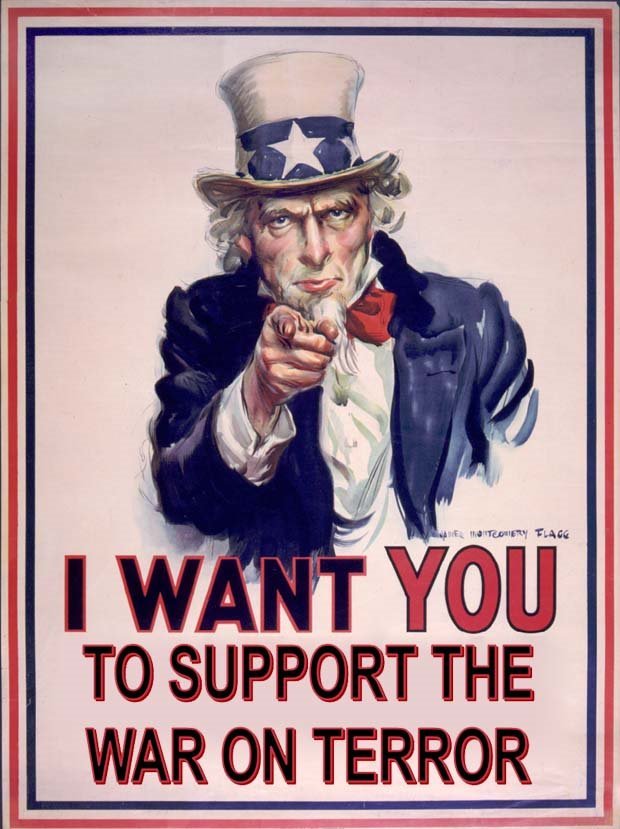
When the towers fell on September 11, 2001, the world watched in stunned silence, then with an outpouring of solidarity. Le Monde, a French newspaper, famously declared, "Nous sommes tous Americains." Within 24 hours, NATO invoked Article 5 for the first and only time in its history, signaling a unified response to an attack on one of its members. But what began as an international wave of sympathy soon transformed into something far more complex and enduring: The 'War on Terror' Doctrine and Its Implementation, a global campaign that reshaped international law, foreign policy, and domestic liberties in ways we are still grappling with today.
This wasn't just another conflict; it was an innovative normative framing, distinct from traditional state-on-state warfare. The "Global War on Terror" (GWOT) marked a profound shift, moving away from formal war declarations common before the 1949 Geneva Convention and embracing a new paradigm with constantly evolving enemies, a steadfast refusal to negotiate with "terrorists," and a scope akin to the Cold War itself.
At a Glance: Understanding the GWOT's Core
- A New Kind of Enemy: From al-Qaeda to "tyrants with WMDs and rogue regimes," the GWOT's adversary was constantly redefined and expanded.
- "Us vs Them" Narrative: Framed by the Bush administration as "civilisation v. barbarism," fostering domestic and initial international support.
- The Bush Doctrine: Advocated for unilateralism, preventative war, and regime change, underpinned by "American Exceptionalism."
- Eroding International Norms: Challenged International Humanitarian Law for "unlawful combatants" and sparked transatlantic distrust due to unilateral actions.
- Strategic Overreach: An expansive definition of "terrorist" created a "strategic straitjacket," limiting potential alliances and negotiation.
- Multidimensional Impact: Affected military strategy, intelligence gathering, diplomacy, and domestic security with lasting legal and social changes.
- Lingering Legacy: Though the rhetoric changed, the operational framework of "counterterrorism" persists, shaping global power dynamics.
Birth of a New Kind of War: Beyond Conventional Conflict
Prior to 9/11, the idea of a "war" against a non-state actor like a terrorist group was largely unprecedented in modern international relations. States had largely shied away from formal declarations of war since World War II due to the burdensome compliance costs associated with the Geneva Conventions. The attacks shattered this paradigm.
Suddenly, the United States, under President Bush and 9/11, found itself confronting an enemy that didn't wear a uniform, didn't claim a specific territory, and operated in the shadows. This forced a redefinition of warfare itself. The GWOT differed from conventional wars in three crucial ways: its enemy was fluid and constantly evolving, initially al-Qaeda but rapidly expanding to include "tyrants with WMDs and rogue regimes" like Iraq under Saddam Hussein; it established "non-negotiation with terrorists" as a core principle; and it represented an innovative normative framing rather than traditional state behavior.
The immediate aftermath of 9/11 saw an "affective wave" of international sympathy for the United States. This global empathy provided fertile ground for the Bush administration to frame the GWOT as a stark choice between "civilisation v. barbarism" or "Us vs Them." Domestically, this narrative resonated deeply, leading to over 90% American support for sending troops to Afghanistan, the initial target of retaliation. This unprecedented level of unity, however, would prove fleeting as the doctrine evolved.
The Bush Doctrine: A Hegemonic Blueprint Emerges
With the emotional backdrop of 9/11, the Bush administration rapidly developed a foreign policy framework that would become known as the "Bush Doctrine." This doctrine wasn't just about counterterrorism; it was a comprehensive vision for projecting U.S. power globally and defining post-Cold War international norms. Its key tenets included:
- Unilateral Action: The willingness to act alone if necessary, without explicit international consensus.
- Preventative War: The right to strike first against perceived threats before they fully materialize, rather than waiting for an attack.
- Regime Change: The belief that replacing hostile governments was a legitimate tool for U.S. security and regional stability.
- American Exceptionalism: The conviction that the U.S., by virtue of its values and power, had a unique role and responsibility to lead the world and was not bound by the same constraints as other nations.
This doctrine found its most controversial application in the 2003 invasion of Iraq. Despite no direct link to 9/11, the administration justified the invasion by attempting to connect it to the attacks, invoking Article 51 of the UN Charter (the right to self-defense) and alleging the presence of Weapons of Mass Destruction (WMDs). The argument, however, stretched the interpretation of self-defense to its breaking point and relied on ultimately false intelligence about WMDs.
Furthermore, the Bush Doctrine directly challenged established international law regarding conflict. For detainees at Guantánamo Bay, for instance, the U.S. government argued that International Humanitarian Law was "obsolete" for "unlawful combatants" and denied them Prisoner of War status. This move was not just a legal maneuver; it was a clear statement of a hegemonic intent, building on earlier strategic documents like the 1992 "Defense Policy Guidance," which aimed to discourage potential competitors and solidify U.S. primacy.
A Divided World: Allies, Distrust, and the "Paradox of Hegemony"
While Bush sought to use 9/11 as a "tipping point" to generate a "rally-round-the-flag" effect and socialize international actors into supporting U.S. leadership, this proved challenging. Pre-9/11 European distrust, fueled by transatlantic disagreements over issues like the Kyoto Protocol and the International Criminal Court, lingered beneath the surface of immediate sympathy.
Indeed, a worldwide coalition for Operation Enduring Freedom (Afghanistan) was assembled, but even among these allies, "divided perspectives" emerged concerning the "war mentality" and growing U.S. unilateralism. The Bush Doctrine's emphasis on acting alone, coupled with its expansive definition of the "War on Terror," quickly eroded the initial goodwill.
The 2003 Iraq invasion became a flashpoint. France, for example, famously threatened a UN Security Council veto, fearing it would set a precedent where the council served as a "rubber stamp for American policy." This wasn't merely dissent; it was a profound concern about the integrity of the international system. Britain's support for Bush, in contrast, was largely driven by an independent foreign policy aimed at forging a "special relationship" with the U.S. and leveraging its hegemonic power, despite significant domestic opposition.
The GWOT frame, particularly the perceived overreach of the Bush Doctrine, contributed significantly to rising "anti-Americanism" and declining U.S. credibility globally. Its "American exceptionalism" was often seen as imperialistic and fundamentally incompatible with the liberal world order the U.S. claimed to lead. This created a "paradox of hegemony," where the U.S. undermined the very international norms and institutions it had helped build by exempting itself from them. This skepticism fueled widespread distrust, including a pervasive "WMD conspiracy" accusing the Bush administration of invading Iraq primarily for oil, rather than for security.
The Strategic Straitjacket: Overreach and Missed Opportunities
The sweeping definition of "terrorist" adopted during the GWOT era inadvertently created a "strategic straitjacket" for U.S. foreign policy. By painting a vast array of groups and even states with the same broad brush, the U.S. effectively discarded potential allies. Countries like Iran and Syria, despite their complex relationships with the U.S., possessed invaluable regional knowledge and capabilities that could have been beneficial in counterterrorism efforts. However, their inclusion on the expanded "terrorist" enemy list precluded meaningful cooperation.
The principle of "non-negotiation with terrorists," while seemingly resolute, further limited diplomatic options. In many conflicts, negotiation, even with adversarial groups, is a critical tool for de-escalation, intelligence gathering, and achieving stability. By adhering strictly to this principle, the U.S. unnecessarily constrained its ability to engage with groups that, while problematic, might not have directly threatened American interests. This rigid stance often prolonged conflicts and complicated humanitarian efforts.
More recently, there has been a noticeable re-evaluation of this overextension. The Biden Administration's 2021 delisting of Yemen's Houthis as a Foreign Terrorist Organization, for instance, was a pragmatic move explicitly aimed at enabling humanitarian aid to reach a desperate population, suggesting a shift away from the absolute "non-negotiation" stance and a recognition of the real-world consequences of broad designations. This indicates a growing understanding that flexibility and nuance are often more effective than an all-encompassing, inflexible doctrine.
The Enduring Shadow: From "War on Terror" to "Counterterrorism"
With the election of Barack Obama in 2008, there was a conscious effort to move away from the "War on Terror" rhetoric. The administration officially discarded the term and ended harsh interrogation practices like waterboarding. This rhetorical shift aimed to rebuild America's image and mend fractured alliances, particularly in Europe.
However, the underlying approach to confronting non-state threats didn't disappear; it merely evolved and adapted. The U.S. continued to engage in extensive counterterrorism operations globally. The rise of ISIS, for example, prompted the formation of a new U.S.-led coalition, demonstrating a persistent commitment to confronting extremist groups. Under Obama, and continuing into the Biden administration, covert predator drone programs expanded significantly, becoming a hallmark of precision strikes against suspected terrorists without the footprint of large-scale ground invasions.
"Counterterrorism" thus became the preferred term, subtly differentiating from the "War on Terror" but maintaining its core objectives. It remains a key means for the U.S. to expand its global "sphere of influence" and reinforce its "primacy" in security affairs. The tools may have become more targeted, the language more diplomatic, but the global reach and interventionist impulse persist, reflecting the enduring legacy of the post-9/11 framework.
The Multidimensional Front: A Global Campaign Unfolds
The "war on terrorism" was never just a military campaign; it was a multidimensional effort comparable to the Cold War in its scope, expenditure, and profound impact on international relations. Its various dimensions illustrate the vast reorientation of U.S. policy and resources:
- Military: This was the most visible front, marked by major wars in Afghanistan (Operation Enduring Freedom) and Iraq (Operation Iraqi Freedom). Beyond these large-scale conflicts, it involved covert operations in numerous countries (e.g., Yemen, Somalia), extensive military assistance programs to allies, and a sustained increase in military spending that continues to this day. Special Forces operations expanded dramatically, becoming the tip of the spear in many counterterrorism efforts.
- Intelligence: The GWOT spurred an unprecedented expansion of U.S. intelligence capabilities. This included global capture and internment of suspects, most infamously at Guantánamo Bay, Cuba, but also through "black sites" around the world. Cooperation with foreign intelligence agencies intensified, and significant resources were dedicated to tracking terrorist financing and disrupting their networks. Surveillance programs, both domestic (NSA, FBI) and international, grew exponentially.
- Diplomatic: On the diplomatic front, efforts focused on maintaining global coalitions for specific operations and engaging in public diplomacy to counter rising anti-Americanism. This involved navigating complex relationships, securing overflight rights, and fostering intelligence sharing agreements. The U.S. pushed for international resolutions and sanctions targeting terrorist organizations and their supporters.
- Domestic (US): At home, the GWOT dramatically reshaped the security landscape. The USA PATRIOT Act, passed shortly after 9/11, significantly expanded government surveillance powers. New security institutions were created, most notably the Department of Homeland Security (DHS), consolidating various agencies. Preventive detainment of suspects, increased surveillance programs (e.g., NSA's data collection), strengthened emergency response protocols, and enhanced security for public events became commonplace, altering the balance between security and civil liberties for ordinary Americans.
Counting the Costs and Calibrating Success: Wins, Losses, and Lingering Questions
Assessing the success of such a monumental and complex undertaking is fraught with difficulty. Early on, proponents pointed to significant achievements: hundreds of arrests of suspected terrorists, the prevention of further major attacks on U.S. soil, the toppling of the Taliban regime in Afghanistan, the elimination of numerous al-Qaeda members, and increased international cooperation on counterterrorism.
However, a chorus of critics soon argued that the failures and unintended consequences significantly outweighed these initial successes. The Afghan war, intended to dismantle al-Qaeda, ultimately scattered the group, leading to its proliferation into new affiliates and regions. The Iraq invasion, justified on false pretenses, drastically destabilized the Middle East, unleashing sectarian violence, creating a power vacuum that ultimately led to the rise of ISIS, and profoundly increasing anti-American sentiment. The estimated human and financial costs have been staggering, with trillions of dollars spent and hundreds of thousands of lives lost, both military and civilian.
Controversial tactics employed during the GWOT era further inflamed public discontent and damaged global perceptions of the U.S. Practices like detention without trial at Guantánamo Bay, the use of enhanced interrogation techniques widely condemned as torture, and the increasing reliance on drone strikes that often resulted in civilian casualties, sparked widespread moral and legal debates. These issues became a major focal point for opposition to the Bush administration and contributed significantly to Barack Obama's 2008 presidential victory, who explicitly campaigned on a platform of change. Though Obama officially discarded the "war on terrorism" term, the operational realities, including expanded special forces and drone programs, continued under his watch.
Navigating the Legacy: What We've Learned and Where We Go From Here
The 'War on Terror' Doctrine and Its Implementation has profoundly shaped the 21st century, leaving an indelible mark on global politics, international law, and societies worldwide. As we look back, several critical lessons emerge.
First, the danger of overreach and an expansive, ill-defined enemy. The broad labeling of "terrorist" groups and the "non-negotiation" principle proved to be a "strategic straitjacket," limiting diplomatic options and hindering effective counterterrorism by alienating potential partners. A more nuanced, context-specific approach is crucial for addressing diffuse threats.
Second, the "paradox of hegemony" demonstrated that even the most powerful nations cannot unilaterally dictate global norms without eroding the very international system that benefits them. U.S. credibility suffered when "American exceptionalism" was perceived as an excuse to bypass international law, highlighting the importance of multilateralism and adherence to shared principles.
Third, the trade-offs between security and civil liberties are constant and complex. Domestic legislation like the PATRIOT Act and expanded surveillance raised profound questions about privacy, due process, and government oversight that continue to resonate today. Future responses to threats must carefully balance security imperatives with the protection of fundamental rights.
Ultimately, the era of the Global War on Terror wasn't a clean victory or a definitive defeat. It was a transformative period that revealed the intricate challenges of confronting evolving non-state actors in a deeply interconnected world. Moving forward, a more adaptable, strategically humble, and internationally collaborative approach to counterterrorism is not just desirable, but essential. Understanding the doctrine's origins, implementation, and profound global fallout is the first step toward navigating the complex security landscape that it created, and that we continue to inhabit.