The images from September 11, 2001, are seared into our collective memory: the smoke plumes, the chaos, the disbelief. That day, a transnational militant Islamist organization named al-Qaeda attacked symbolic centers in the U.S., shattering a sense of invulnerability and fundamentally redefining global priorities. Suddenly, the very meaning of "national defense" shifted, ushering in unprecedented Foreign Policy Shifts: The Wars in Afghanistan and Iraq.
These conflicts, born from an urgent need for retribution and security, reshaped not only America's military posture but also its diplomatic playbook, economic priorities, and even its understanding of sovereignty. They pulled back the curtain on the complexities of combating non-state actors and the daunting challenges of post-conflict reconstruction.
At a Glance: Key Takeaways from the Foreign Policy Shifts
- 9/11 as the Catalyst: The al-Qaeda attacks in 2001 fundamentally redefined U.S. foreign policy, shifting focus squarely onto global terrorism.
- The "War on Terror": Launched by the Bush administration, this campaign began in Afghanistan (Operation Enduring Freedom) to dismantle al-Qaeda and remove the Taliban.
- Strategic Expansion to Iraq: In 2003, the U.S. expanded the war, citing unconfirmed WMDs and terror links, marking a controversial shift towards preventive war.
- Long-Term Consequences: Both wars led to expanded executive power, ballooning defense budgets, and prolonged military commitments, highlighting the difficulties of nation-building.
- Post-Withdrawal Afghanistan: U.S. policy has since evolved through phases of disengagement, fluctuating engagement, and a recent shift towards direct, pragmatic contacts with the Taliban, primarily focused on counterterrorism and humanitarian aid.
- Taliban's Firm Stance: The Taliban rejects U.S. demands like returning military equipment or exchanging frozen assets for political concessions, seeking relations on an equal footing.
- Future Scenarios: The U.S. weighs "wait-and-see" approaches (hoping for Taliban internal divisions) or leveraging frozen assets to counter Chinese influence.
- Inconsistent Strategy: An absence of a clear long-term vision, doubts about Taliban stability, and human rights concerns continue to complicate U.S. engagement with Afghanistan.
The Day Everything Changed: 9/11 and the Genesis of the "War on Terror"
Before 9/11, U.S. foreign policy largely revolved around state-centric threats, Cold War doctrines, and regional stability. The attacks, however, presented a new, insidious enemy: transnational terrorism. Terrorism, in this context, wasn't about conventional armies or borders; it was the unlawful use of violence against civilians to achieve political aims through fear, coercion, or intimidation. This new threat demanded a radical re-evaluation.
President George W. Bush and 9/11 found the nation galvanized for action. His administration swiftly declared a "War on Terror," signaling an era where counterterrorism would become the overriding lens through which foreign policy decisions were made. This wasn't just a military campaign; it was a conceptual framework that would profoundly alter America's global role for decades.
Afghanistan: From Liberation to Protracted Conflict
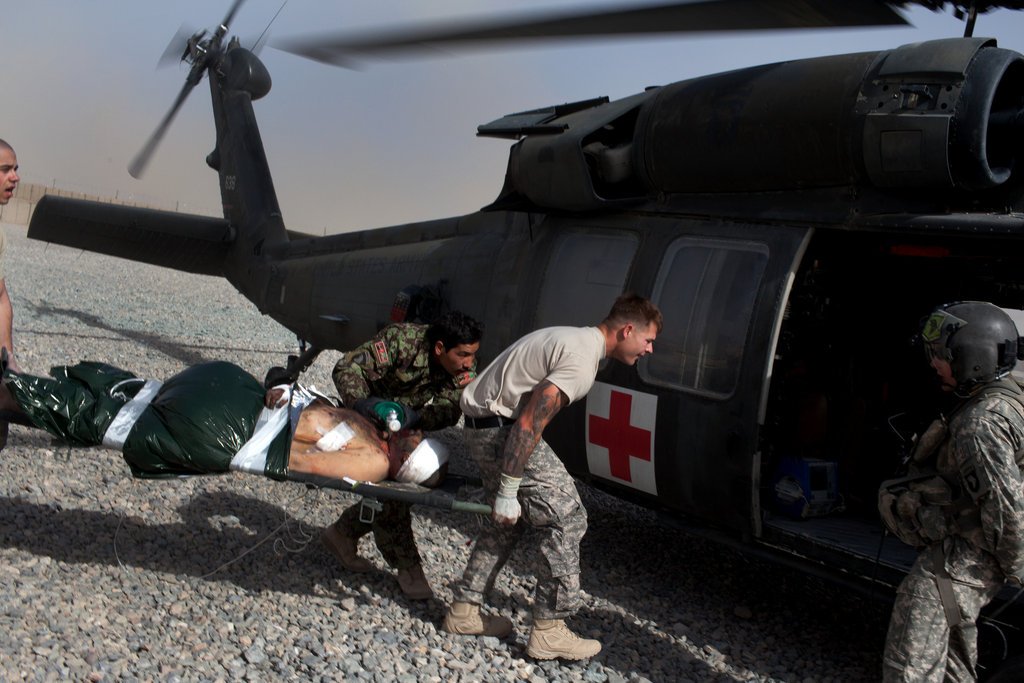
The first salvo of the "War on Terror" was Operation Enduring Freedom, launched in October 2001. The primary objective was clear: dismantle al-Qaeda, responsible for 9/11, and remove the Taliban regime in Afghanistan, which had provided safe harbor for the terrorist group's leadership.
Initially, the campaign was swift and decisive. A combination of intense airstrikes, targeted special operations, and alliances with the Afghan Northern Alliance quickly toppled the Taliban from power. Osama bin Laden and other al-Qaeda leaders were forced into hiding, and Afghanistan, seemingly, was "liberated."
However, what began as a targeted intervention soon evolved into a prolonged, complex counterinsurgency. The mission expanded beyond simply eliminating terrorists to include nation-building, democratic institution-building, and supporting a new Afghan government. This expansion, coupled with a resilient insurgency and the rugged terrain, transformed Operation Enduring Freedom into America's longest war, stretching nearly two decades. The shift from a quick strike to a deep, long-term commitment was one of the earliest signs of the profound Foreign Policy Shifts: The Wars in Afghanistan and Iraq would introduce.
Iraq: The Controversial Expansion of the "War on Terror"
While Afghanistan remained an active theater, the Bush administration made a significant, and ultimately controversial, strategic decision: it expanded the War on Terror to Iraq in 2003. This expansion wasn't directly linked to 9/11 in the same way Afghanistan was. Instead, the rationale centered on claims of Saddam Hussein's regime possessing Weapons of Mass Destruction (WMDs) and having links to terrorist organizations.
This move marked a pivotal shift toward the doctrine of preventive war—a willingness to use military force preemptively against perceived threats, even without an imminent attack. Critics argued that the evidence for WMDs was thin, and the connection to al-Qaeda dubious. Nonetheless, the invasion proceeded, leading to the rapid overthrow of Saddam Hussein's regime.
The Iraq War, much like Afghanistan, quickly devolved from a conventional military victory into a protracted and violent insurgency. The failure to find WMDs further eroded international trust and complicated the U.S.'s moral standing on the global stage. The decision to invade Iraq solidified the idea that the War on Terror wasn't just about al-Qaeda; it was about reshaping the broader Middle East and confronting perceived threats before they materialized, dramatically altering the doctrine of preventive war and global security priorities.
A New Paradigm: Executive Power, Budgets, and Global Commitments
The wars in Afghanistan and Iraq had profound domestic and international consequences that redefined U.S. foreign policy.
- Expanded Executive Power: The exigencies of national security led to a significant expansion of presidential authority, particularly in areas of intelligence gathering, surveillance, and military action, often under the umbrella of "wartime powers."
- Growth in Defense Budgets: Military spending soared to unprecedented levels, diverting resources from other domestic and international priorities. The financial cost of these wars ran into trillions of dollars, impacting the national debt and future economic flexibility.
- Long-Term Military Commitments: The U.S. found itself entangled in nation-building efforts and prolonged military presences, far beyond initial timelines. This commitment highlighted the complexities of engaging with non-state actors and the enormous challenges of post-conflict reconstruction in vastly different cultural and political landscapes.
- The Drone Era: The conflicts accelerated the development and deployment of drone technology, reshaping counterterrorism tactics by allowing for targeted strikes with reduced risk to U.S. personnel, but raising ethical and legal questions about sovereignty and collateral damage.
- Alliances Under Strain: While the U.S. garnered international support for the initial push into Afghanistan, the invasion of Iraq strained relations with key allies and multilateral institutions, complicating future diplomatic efforts.
These factors fundamentally altered how the U.S. viewed its role in the world, its capabilities, and its limitations, leaving an indelible mark on its strategic outlook.
The Long Shadow: Enduring Legacies on US Foreign Policy
Even after the official end of major combat operations and troop withdrawals, the wars in Afghanistan and Iraq cast a long shadow over U.S. foreign policy. They shaped how America approached alliances, engaged in international development, and conceived of its national interests.
One enduring legacy is the continuous evolution of evolving counterterrorism strategies. While direct military interventions became less popular, the U.S. maintained a global counterterrorism posture, relying more heavily on intelligence, special operations, and partnerships with local forces. This shift recognized the limitations of large-scale occupations and the need for more agile responses to diffuse threats. The very nature of military engagement, from boots-on-the-ground to over-the-horizon capabilities, reflected these hard-won lessons.
Post-Withdrawal Afghanistan: Navigating a New Reality
The U.S. military withdrawal from Afghanistan in August 2021 and the swift return of the Taliban to power marked a dramatic turning point. U.S. policy toward Afghanistan since then has evolved through distinct, often contradictory, phases.
Continuing Counterterrorism, Without Boots on the Ground
Even without a direct military presence, the U.S. continues its counterterrorism efforts. This "over-the-horizon" strategy relies on intelligence gathering, drone strikes, and partnerships with regional actors to monitor and disrupt groups like ISIS-Khorasan and al-Qaeda. The goal is to prevent Afghanistan from once again becoming a safe haven for transnational terrorist organizations, a central tenet of the War on Terror that remains intact despite troop withdrawals.
The Diplomatic Chill: Political Disengagement and Missed Opportunities
Following the chaotic withdrawal, the U.S. largely adopted a policy of political disengagement and diplomatic boycott. Major infrastructure and economic projects like the TAPI gas pipeline, the CASA-1000 energy route, and the Trans-Afghan transport corridor—all initiatives once seen as crucial for regional stability and U.S. influence—were put on hold. The primary exception to this disengagement has been the provision of humanitarian aid, recognizing the dire needs of the Afghan people. This period highlighted a struggle to reconcile security interests with humanitarian concerns amidst a hostile political landscape.
Trump's Pivot: From Denunciation to Direct Talks
The Trump administration's approach to Afghanistan, initially influenced by "Make America Great Again" (MAGA) campaign logic (January-mid-March), was characterized by strong public statements, demands for officials' return, and criticism of Taliban policies. This phase aimed to restore perceived U.S. authority and project strength. However, by late March, a pragmatic shift occurred, leading to direct contacts with Taliban representatives. This dual approach showcased the tension between ideological posturing and the practicalities of dealing with a de facto regime, illustrating the fluidity of broader Middle East geopolitics.
Current Overtures: The Path of Direct Engagement
More recently, a notable shift toward direct engagement is evident. Visits by former U.S. Special Representative Zalmay Khalilzad and U.S. Presidential Envoy for Hostage Affairs Adam Boehler in March (of this year) with Taliban's Foreign Minister Amir Khan Muttaqi highlight this change. Discussions focused on cooperation, leading to the release of an American citizen. This strategic pivot may be partly incentivized by the growing rapprochement between the Taliban and other regional actors, compelling Washington to maintain some leverage and dialogue.
The Taliban's Terms: A Bid for Equal Footing
The Taliban, now in power, seeks relations with the U.S. on an equal footing, a stark contrast to their status as an international pariah. They have categorically rejected key U.S. demands:
- Military Equipment: The Taliban claims that any military equipment left behind during the U.S. withdrawal is now the rightful property of Afghanistan, firmly rebuffing demands for its return.
- Frozen Assets: They also rejected a proposed exchange of military equipment for Afghanistan’s frozen foreign assets, arguing these assets belong to the Afghan people, not merely the government, and should be unfrozen unconditionally.
These rejections underscore the Taliban's desire for legitimacy and control, complicating diplomatic negotiations and signaling their unwillingness to concede easily.
Uncertain Futures: Scenarios for US-Afghan Relations
Looking ahead, two potential scenarios loom for the future of U.S.-Afghan relations, each with its own set of risks and opportunities:
Scenario 1: The "Wait-and-See" Approach
In this scenario, the U.S. adopts a patient stance, hoping that internal divisions within the Taliban leadership might lead to a more compromising regime. There's a perceived ideological rift between figures like conservative Supreme Leader Haibatullah Akhundzada and more pragmatic leaders like Acting Interior Minister Sirajuddin Haqqani. Washington might believe that the allure of economic benefits and partial political recognition could push a faction toward a more moderate, internationally acceptable posture. This approach, however, carries the risk of prolonged instability and potentially strengthening hardliners if internal dynamics don't shift as hoped.
Scenario 2: Leverage for China Containment
The U.S. could leverage Afghanistan's frozen assets as a powerful bargaining chip. The unfreezing of these assets might be conditioned on a reduction of Chinese influence within Afghanistan and a reorientation of Kabul's foreign policy towards Washington or alternative partners like India. This strategy would aim to counter China's Belt and Road Initiative expansion in the strategically located country, positioning Afghanistan within a broader geopolitical competition. Such a move, while appealing for strategic reasons, could be seen as interventionist and might backfire by pushing the Taliban further into the arms of Beijing or other rivals. These potential futures highlight the complexities of future US-Afghan diplomatic landscape.
Uzbekistan: A Potential Bridge Builder?
Amidst the complexities, Uzbekistan emerges as a credible candidate for mediating a re-establishment of U.S.-Afghanistan relations. Several factors position it uniquely:
- Strategic Partnership with the U.S.: Uzbekistan maintains a strong strategic partnership with the U.S., built on shared security interests and economic cooperation.
- Prior Cooperation on Afghan Issues: It has a history of practical cooperation on Afghan issues, including providing an airbase for U.S. operations and harboring U.S. military equipment.
- Assistance to Trump Administration: Notably, Uzbekistan assisted the Trump administration by returning seven Black Hawk helicopters, demonstrating its willingness to cooperate.
- Shared Views: It shares common views with the U.S. on Afghan security and economic development, offering a potential foundation for consensus.
- Closest Partner: As one of Afghanistan's closest regional partners, Uzbekistan has established lines of communication and influence with Kabul, making it an ideal intermediary.
Leveraging such a regional actor could provide a crucial backchannel and a more culturally nuanced approach to engagement, potentially de-escalating tensions and fostering pragmatic dialogue.
The Road Ahead: Navigating Inconsistency and Complexities
Despite the shifts and potential pathways, the overall U.S. strategy toward Afghanistan remains uneven and inconsistent. Several critical factors contribute to this persistent challenge:
- Absence of a Clear Long-Term Vision: Washington struggles with a definitive, cohesive strategy for Afghanistan beyond immediate counterterrorism concerns. This lack of clarity often leads to reactive rather than proactive policy.
- Doubts about Taliban Rule Stability: There are ongoing doubts about the internal stability of Taliban rule, particularly concerns about potential divisions between conservative and pragmatic factions. This uncertainty makes Washington hesitant to fully commit to any particular engagement strategy.
- Growing Terrorist Activity: The increasing activity of terrorist groups like ISIS-Khorasan and Tehrik-e-Taliban Pakistan (TTP) poses a significant threat. The U.S. perceives the Taliban as weak or unwilling to effectively neutralize these groups, undermining trust.
- Ongoing Human Rights Concerns: Persistent and severe human rights concerns, particularly for women and girls, remain a major stumbling block. The Taliban's restrictive policies conflict sharply with U.S. values and make full political recognition difficult, directly impacting Taliban's human rights record on the international stage.
These interwoven factors contribute to Washington's deep-seated doubts about Kabul's reliability as a partner, making a comprehensive and consistent approach elusive.
What These Shifts Mean for You (and the World)
The Foreign Policy Shifts stemming from the Wars in Afghanistan and Iraq are not merely historical footnotes; they represent a fundamental reorientation of global power dynamics and strategic thinking. For you, as an engaged citizen, understanding these shifts means recognizing:
- The Enduring Cost of Conflict: Both in human lives and financial resources, the long-term costs of intervention are immense, impacting domestic priorities and future foreign policy options.
- The Nuance of Non-State Actors: Combating transnational terrorism requires approaches far more complex than traditional warfare, demanding sophisticated intelligence, diplomatic agility, and targeted actions.
- The Imperative of Diplomatic Engagement: Even with adversaries, open channels for communication, whether direct or through mediators, are often crucial to de-escalate crises and pursue national interests.
- The Role of Human Rights: How a nation treats its own people, particularly its most vulnerable, has tangible implications for its international standing and the willingness of other nations to engage.
The lessons from Afghanistan and Iraq continue to shape debates about intervention, nation-building, and the very definition of security in an interconnected world. As policymakers grapple with new global challenges, the experiences of these past two decades serve as a potent reminder of the complexities inherent in wielding power and the unpredictable ripple effects of even the most well-intentioned foreign policy decisions. The future of U.S. foreign policy will undoubtedly continue to be written in the shadow of these transformative conflicts.